Showing posts with label legacy systems. Show all posts

Wednesday, January 21, 2009

Using AppEngine -- Or Similar Datastore -- To Integrate Complex Legacy Data Formats

I gave a lightning talk last night at the SF Bay Area App Engine Developers, showing some work I've been doing to represent gnarly legacy records in AppEngine so as to maintain source fidelity, minimize upfront analysis, and make them easy to integrate with other systems.

I had started with an XML record that I wanted to parse and represent in the datastore -- without knowing which tags and structures would be present, since this format had, ahem, evolved to obscurity over time, as often happens with real-world legacy records.

Before I talk about my approach, here's why I thought this effort might be interesting to the group: a lot of data structures have a tree structure in common with XML. From C structs and file blocks that include a header, telling which types to cast the next n bytes to (and so on inside of those) ... to mainframe "structured data" records I've encountered which consist of nested records, parsed recursively, with their meanings occasionally opaque, lost to history, or belonging to some partner company.

My approach -- which is simply to create a mapping of how to assemble and disassemble the records -- enables a record to be stored in a single App Engine record. But not as a block (or blob) -- rather with fine-grained addressable fields that are easy to talk to using the GAE Datastore API.

In my case, since my original was XML, I created a mechanism similar to a tiny subset of XPath describing the sequence of tags where a data element lived -- but with the characters changed so that it would be Python and GAE-friendly. That is, instead of "/foo/bar[2]/baz" I used _Foo_Bar__2_Baz.

This let me "flatten" the XML into a set of key-value pairs, while allowing that the XML might contain arbitrary structures injected by others ... and that I might want to inject my own extra structures. This arrangement is perfect for the Expando models in App Engine Datastore, or any similar store (e.g. Hypertable, which is modeled after BigTable, or Microsoft SQL Data Services which uses SQL 2008's sparse tables to similar effect).

So now I can store and retrieve my records. Any fields/subrecords which I understand and care about, I can easily work with from other systems, by mapping to the appropriate "key" in the stored record.

For example, if I'm storing a bunch of catalog data, and another system just cares about enumerating each "Product" with "Name" and "Price," then I can create a facade or wrapper in GAE that maps, say, Price to _Strange_Old_Way_To_Represent_Current_Price, and we're all set.

To be sure, there could be performance issues if you tried to use this to create arbitrary queries and reports against the data. That's not really the purpose and, in my experience, if there are no "shortcuts" to processing these legacy records, then the business folks are not used to being able to make an OLAP cube out of them either. (They probably have a batch or offline extraction process.)

Nonetheless, it's another tool in our chest when we need to work with systems and data that have been out in enough real-world battles to come home scarred with lots of cruft.

Friday, August 15, 2008

Tripeedo Brings Travel Search Full-Circle

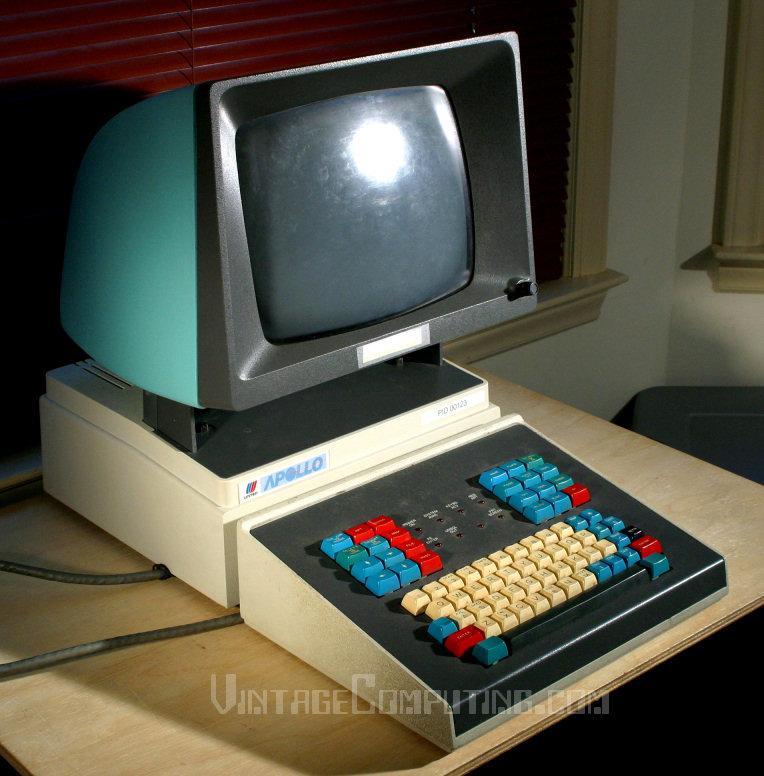
I couldn't help but crack up when I read a post about Tripeedo, an AJAX-enabled "command line for travel," since of course all this reservation searching stuff was on a command line to begin with, on a terminal a generation older than this hideous beast. And in fact while the hardware has mercifully been emulated away, the protocols are still in wide use under the hood in the travel industry.

I had to use a command line like this as recently as 2006 for a project. Unlike tripeedo's version, I recall the search started with a strange lozenge character that doesn't seem to have a proper Unicode name, but was part of the 6-bit EBCDIC charset these terminals used when they were deployed in 1969. Then came a letter or a delimiter of some sort, and then a line like 15AUGSFODFW to look at flights on August 15th from SFO to DFW.

I thought I'd try it in Tripeedo. The site prefers the month first, and it likes spaces. And, unlike the old system, it has lowercase letters too!

So I type "15 aug sfo dfw" and get some flights to look at. In 1969, this was the future.

Tuesday, April 08, 2008

The Big Bad Rewrite Isn't Always a Bad Idea

The other day I wrote about how a lot of value in legacy systems could be liberated by more freethinking and vigorous modification and refactoring -- not the defaults of "replacement" or "incremental maintenance."

Now I'm going to look at the other end of things -- when it makes sense for to replace even "young" systems with a full-on rewrite.

Joel Spolsky has written one of the more famous essays on the big rewrite as anti-pattern. And he's right in that essay. Don't rewrite because you have grand dreams of tearing down the house to build a beautiful code palace, or because code is easier to write than to read, or because you don't like the platform the other guys used, or because your team ends every status meeting with "we need to throw the codebase out and start over," like Cato the Elder ending every speech Carthago delenda est.

A rewrite makes a lot of sense, though, in situations where the original implementation was pushing the bounds of the platform, resulting in some hairy, troublesome, and expensive-to-maintain code ... and meanwhile the industry has caught up and moved past you to the point that the hard areas are now trivial.

In the late 90s, you might have spent a bunch of time on a very complex desktop reporting app with Java 2D graphics. Your engineers hacked to the limits of what Java could do ... and maybe even tore out into the world of JNI/OpenGL or COM/DirectX to push the bounds. You used CORBA or wrote your own communication protocol, worked around firewall issues, etc. Suppose that today, the code still causes trouble, is difficult to maintain -- and could be replaced with a few hundred lines Adobe AIR/ActionScript code and web service calls. The smart thing to do is rewrite.

Look at the apps your company may have built 5-10 years ago, especially anywhere you were pushing the bleeding edge not as value-add but just as support. Do you have a roll-your-own communication protocol that made sense at the time, but could now be replaced with 10-lines of script, or a point-and-click binding in your IDE of choice? Did you write a persistence layer (or work the source code of an open-source one) when databases were more expensive and each server could house much less data than today?

Here are some common factors indicating it may be time to do a rewrite:

  1. Volumes of code can be replaced with much less code (leveraging newer open source and/or vendor-supported libraries).
  2. The existing code is creating real, measurable, avoidable expense at a large ratio (like 2:1, not 1.15:1)
  3. Your goal is to leverage other smart people's work, not prove that you're smarter than the guy who wrote your old system.
  4. At the business level, you need to gain leverage by getting back up on top of a technology stack and out of the middle where you're toiling away creating no externally measurable value.

Sunday, April 06, 2008

Want More Money? Repair, Remediate, Refactor

In the time it takes you to read this sentence, about $6.02x10²³ dollars will have been wasted in lost productivity due to old, rickety, hard-to-use, non-performant software systems.

Well not so many dollars, but the loss is real -- whether it's the energy and cost-of-operation for more servers, when fewer could do the same job; whether it's hours spent waiting for CSRs to tab through tens of screens in legacy line-of-business apps to find the one field they still use; or worse, when a police dispatcher makes a mistake because software makes it hard to click the right thing fast and dangerously easy to click the wrong one.

Strategies for making "bad old systems" better are not the most popular topic for the tech elite. This makes sense for a bunch of reasons. The mythologies we live by are generally startup oriented. But, more importantly, real roll-up-your sleeves work on old systems doesn't scale. The hard problems are business-specific and not ones that licensable products can solve ... so anyone on a mission to save the world from these systems ends up with a services approach -- i.e., a process approach -- that is bottlenecked by human quality-and-scaling problems.

That's a bummer, because there is a lot that can be done with old systems once a really good team starts thinking about them. Forget the big rewrites and the magic bullets. Forget the awful HTML front ends that barely hide COBOL.

In between are some great possibilities. A lot of legacy architectures lend themselves to SOA without even knowing it. Inexpensive hardware and storage means, in some cases, legacy client bits can be moved back to the datacenter and integrated into a middle tier. Other times, the clients can be done away with altogether if someone has the chutzpah to figure out the "old" protocols and implement them with modern tech.

While I mostly work with startups, I've been involved with at least three projects in the last five years that included some re-engineering of legacy systems. One of these systems was almost 40 years old and used emulation of custom hardware (and a custom physical network) just to communicate. Two of the three were barely documented, or not documented at all. And at least one was a total clusterfudge, in the sense that it hadn't aged and "crufted" naturally, but was the result of crackpot work that was known to be broken from the relatively recent start.

In all of these cases, it was possible to improve the architecture, performance, and functionality of the system without the mega-rewrite. And since the existing systems had tons of data and transactions running, the new software needed to run smoothly side-by-side with existing software, allowing a limited and careful transition.

Here's the kicker: in two out of the three cases, although the "new" software was a vast improvement, it was never allowed to take on a larger role in the enterprise outside of a niche for which it had been developed. A bunch of startup hotshots writing cutting-edge stuff was simply not in the Enterprise IT Legacy Technology Lifecycle Planning Regime and so, like the dismissal of Heron's steam engine in the first century, the new technology was regarded as a mere novelty.

There are some reasons for conservatism and stodginess around legacy systems. But there is also a ton of value waiting to be liberated as soon as some of that stodginess can be shed.